Amazon search
First things first, Amazon search is not a universal search engine (you can’t find answers to a medical journal or the latest trending news, it’s not Google). Its algorithms are similar to Google’s, although they are used for internal searches that lead to Amazon pages.
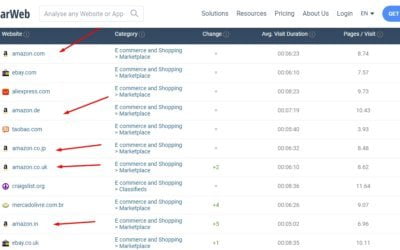
What’s the fuss about then? More people go directly to Amazon to search for specific types of products instead of starting with a Google search. According to a study conducted on similar websites, the top 10 shopping websites include 5 Amazon sites: USA (#1), Germany (#4), Japan (#6), the United Kingdom (#7), and India (#10). With the average user spending over 6 minutes on their website, don’t you think you should put your products in front of them? That’s a huge portion of the market share!
These figures tell us that Amazon search is becoming the Google of e-commerce. It means that if you sell something and you’re not on Amazon, you are missing out on all those potential customers. For example, in person, Walmart is one of the leading shopping stores; however, when users go online, Amazon captures most of the traffic, offering prices on average 10% lower and showing closer matches to the product the user is looking for. Not to mention it’s shipped right to your door at no extra cost (with Prime membership, of course).
If you are selling products that are allowed on the Amazon marketplace, you should check your competition to see if you can outdo them. If you do sell products that are a good fit for selling on Amazon, be sure to include optimization for Amazon in your website SEO strategy.
Action plan:
- Run keyword research. To be more industry-wise, use Amazon itself to search for products similar to yours. Rank Tracker, for example, has an Amazon Autocomplete keyword research tool that you can use for Free to check out keywords you think might perform well and give you insight as to why or why not.
- Make your item title & description efficient and user-friendly (+ smart use of keywords). Ensure that it includes the important keywords you identified in step 1 and makes logical sense to the reader.
- Provide high-quality images. Everyone hates landing on a product and not being able to see the actual product. If you can afford to get your own product images taken, it’s well worth it. Alternatively, you could try finding stock images or simply take the best photo you can with your own camera.
- Cater to “backend keywords” (or meta tags, if in Google’s terms). They inform the Amazon algorithm that a specific item targets a specific keyword on the site, which helps connect your products to users searching for it.
- Track customers’ reviews and address complaints. After a user finds your product, they will look at the product rating, and if they see all 1-star ratings, you’re unlikely to make the sale. If a customer has a complaint or issue, address it immediately to make sure you can ask for 5-star ratings on every sale.
In conclusion
Why not take advantage of the tools that you already have at your fingertips? To achieve a high-performing website and business, you must be competitive and get in front of potential customers. Use Amazon search to get the boost that you need. If you need help, contact the Valley List, and our professionals will get the work done when you don’t have the time to do it.